10 Best Welders of 2026, Tried, Tested, Ranked
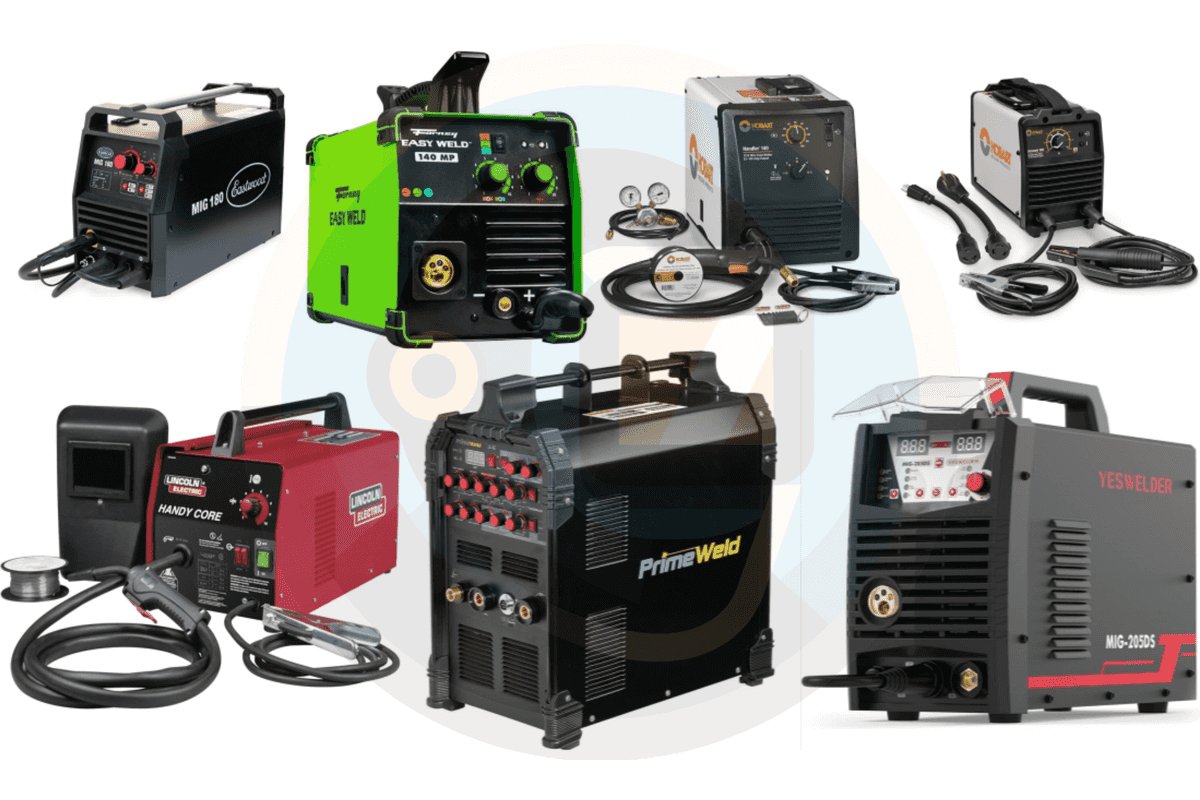
Buying your first welder is mostly a fight against jargon: MIG, TIG, stick, flux-core, duty cycle, dual-voltage, and a wall of near-identical machines. After reading through hundreds of owner reviews and a stack of forum threads, the Hobart Handler 140 came out as the pick I'd hand most people, a name-brand wire-feeder that runs on a household outlet and grows with you.
But it isn't the right call for everyone. Some of you want one box that welds aluminum, steel, and stainless; some need a stick machine for rusty farm gates; a few just want the most affordable honest starter. So I sorted ten welders by what they're actually for, then ranked them, with Pepper the cat supervising, unimpressed as always.

- Clean stable arc: Smooth arc on thin steel that owners call forgiving for first-time welders
- Strong power output: Welds 24-gauge sheet up to quarter-inch mild steel on a household outlet
- Simple dial-in controls: Five-position voltage tap and quick-select drive roll make setup genuinely beginner-proof
- Sturdy construction: Cast-aluminum wire drive resists bird-nesting and survives years of regular garage use
- Handles thick metal: Quarter-inch single-pass capacity covers the bulk of home and farm repair work
- Long warranty coverage: Hobart's five-three-one industrial warranty outlasts almost everything else in this lineup
- 115V only: No 240V option caps duty cycle and rules out heavy plate work

- Clean stable arc: Synergic mode dials voltage automatically, giving new welders a steady, low-fuss arc
- Strong power output: Full 200-amp output on 220V welds quarter-inch steel without a second machine
- Simple dial-in controls: Large digital screen and one-button mode switching keep five processes approachable
- Sturdy construction: Light 31-pound inverter that owners report holds its settings well over time
- Handles thick metal: Steps from thin sheet to quarter-inch plate on flexible dual-voltage power
- Long warranty coverage: Backed by responsive support and a warranty rare at this affordable price tier
- TIG torch extra: Lift-TIG works, but the torch and spool gun cost extra upfront

- Clean stable arc: Reviewers rate its arc a notch smoother than rival budget multiprocess machines
- Strong power output: Six processes including spot welding across a genuinely usable thirty-to-two-hundred-amp range
- Simple dial-in controls: Burn-back and inductance trims give fine control the modest price tends to hide
- Sturdy construction: Compact 24-pound body with a carry strap built for moving between jobs
- Handles thick metal: Reaches five-sixteenths-inch steel on 220V, beating most machines its compact size
- Mode learning curve: Six processes mean more menus to learn before you weld confidently

- Clean stable arc: High-frequency start and pulse control give a precise, steady arc on aluminum
- Strong power output: Wide ten-to-two-hundred-twenty-five-amp range with a hundred-percent duty cycle at 108 amps
- Simple dial-in controls: AC-frequency and pulse-width knobs read clearly once you learn the TIG basics
- Sturdy construction: Heavier 59-pound build and quality torch parts signal a genuinely serious machine
- Handles thick metal: Single-pass quarter-inch welds plus real aluminum capability through AC output
- Steep learning curve: TIG demands real practice before your welds look clean and consistent
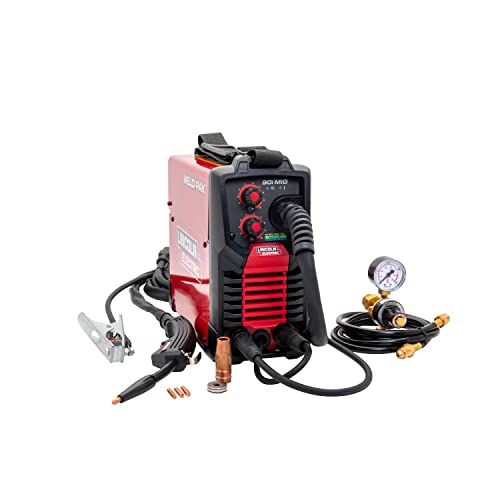
- Clean stable arc: Dependable Lincoln arc that owners trust for everyday steel fabrication tasks
- Strong power output: Thirty-to-one-hundred-forty-amp range welds up to three-sixteenths-inch steel on household power
- Simple dial-in controls: Two-knob tap-voltage setup is about as plug-and-go as MIG welding gets
- Sturdy construction: Protective metal case and shoulder strap survive a busy working shop environment
- Handles thick metal: Three-sixteenths-inch capacity suits most brackets, repairs, and light fabrication jobs
- 120V only: Single-voltage input limits thickness compared with dual-voltage machines lower down

- Clean stable arc: Gasless flux-core arc stays steady outdoors where gas MIG struggles in wind
- Strong power output: Infinitely adjustable ten-to-one-hundred-forty-amp range welds up to quarter-inch steel plate
- Simple dial-in controls: No gas and no regulator; load wire, set two dials, pull the trigger
- Sturdy construction: At 19 pounds it is the easiest machine here to carry and store
- Flux-core only: No gas MIG, TIG, or stick limits it to a single process
- Spatter and slag: Flux-core throws more spatter and leaves slag you must chip off

- Clean stable arc: The steadiest stick arc in this group on both 6010 and 7018 rod
- Strong power output: Fifteen-to-two-hundred-ten-amp output welds three-eighths-inch steel in a single confident pass
- Simple dial-in controls: Hot-start and arc-force adjustments help beginners strike and hold the arc
- Sturdy construction: Miller build and multi-voltage plug add up to a tough, portable rig
- Premium cost: Carries a clear price step over the value machines on this list
- Spatter cleanup: Stick welding spatters and leaves slag that needs chipping and brushing

- Clean stable arc: All-metal drive feeds wire smoothly for clean beads on thin body panels
- Strong power output: Thirty-to-one-hundred-eighty-amp range welds five-sixteenths-inch steel on 240V household power
- Simple dial-in controls: Tack-stitch mode and a 2T/4T trigger lock ease long, thin-sheet runs
- Sturdy construction: Tweco-style gun uses common consumables you can source almost anywhere cheaply
- Heavy build: At 55 pounds it is not a machine you move around often
- Modest duty cycle: Thirty-percent rating at 90 amps means breaks during longer welding sessions
- Slow support: Owners report that Eastwood customer service can be slow to respond

- Clean stable arc: Inverter platform holds a stable arc across MIG, TIG, flux-core, and stick
- Strong power output: Twenty-to-two-hundred-amp output pushes three-eighths-inch steel on 240V dual-voltage power
- Simple dial-in controls: Digital readout and synergic MIG keep four processes manageable for newcomers
- Sturdy construction: Everlast's inverter track record and US support stand behind the machine
- Awkward sourcing: Tracked listing sells through a Canadian storefront that complicates the buying process
- Higher cost: Priced above the value multiprocess picks without matching their wide availability
- Thin documentation: Manuals and setup guidance are sparse compared with the bigger-name rivals

- Clean stable arc: Heavy transformer core lays a stable arc on quarter-inch steel all day
- Strong power output: Thirty-to-one-hundred-seventy-five-amp output handles thicker plate than the light inverters here
- Simple dial-in controls: Basic but reliable dials that do exactly what longtime welders expect them to
- Sturdy construction: Old-school transformer build feels industrial and holds up to sustained welding heat
- Very heavy: At 85 pounds it stays parked on a cart, not carried
- 240V required: Needs a 240V circuit that many home garages simply do not have
- Basic controls: No synergic automation, so you set voltage and feed speed manually
In-Depth Reviews of Top 10 Best Welder
#1 · Editor's Choice
Hobart Handler 140 MIG Welder
Across the reviews and forum threads I read, one name surfaced more than any other for a first wire-feeder: the Hobart Handler 140. Owners keep returning to the same points, a smooth, stable arc on thin steel, a cast-aluminum drive that does not bird-nest wire, and Hobart's long warranty behind it. It runs on a standard 115V outlet and welds up to 1/4-inch mild steel, which covers most home and farm repairs. It is not flawless, though. The 115V-only design caps it at a 20% duty cycle at 90A with no headroom for thick plate, so if you weld heavier steel often, a dual-voltage machine lower on this list is the smarter buy. For everyone else, it is the safe pick.
The verdict: The welder I'd hand a beginner without a second thought, as long as 115V power matches your projects.
#2 · Runner-Up
Yeswelder MIG-205DS PRO Multi-Process Welder
Most multiprocess machines this affordable cut a corner somewhere, but the YESWELDER MIG-205DS PRO mostly does not. It is a 5-in-1 (gas MIG, flux-core, lift TIG, and stick) that runs 20-200A on either 110V or 220V, so it scales from sheet metal to 1/4-inch plate without a second machine. Owners praise the synergic mode that sets voltage for you, and at 31 pounds it moves around a shop easily. The ArcCaptain just below edges it on raw arc smoothness, but the YESWELDER's bigger digital screen and lower typical street price keep it the better all-rounder for a first multiprocess unit.
The verdict: The most machine for the money if you want every common process in one affordable box.
#3 · Best Value
ArcCaptain MIG200 6-in-1 Multi-Process Welder
Buy this if you want the most welder per dollar on the list. The ArcCaptain MIG200 is a 6-in-1 (MIG, flux-core, stick, lift TIG, spot, and spool-gun aluminum) running 30-200A on 110V or 220V, and reviewers consistently rate its arc a touch smoother than the YESWELDER's. At 24 pounds with a carry strap, it is the one I would actually grab for a job. Burn-back and inductance adjustments give finer control than the price suggests, and it welds up to 5/16-inch steel on 220V. There is a learning curve to all six modes, but the synergic settings shorten it considerably.
The verdict: Hard to beat on capability per dollar, and light enough to be the one you grab first.
#4 · Best Tig
PrimeWeld TIG225X Ac/dc TIG Welder
If aluminum or clean, precise welds are on your list, this is where I'd point you. The PrimeWeld TIG225X is a full AC/DC TIG machine, AC for aluminum and DC for steel and stainless, with pulse and AC-frequency control that owners say rivals machines costing far more. It runs 10-225A on 110V or 220V and holds a 100% duty cycle at 108A, so it will not quit mid-bead. It ships with a CK17 torch and a foot pedal, which is rare at this level. TIG is the hardest process to learn, so budget practice time; this is a machine you grow into, not one you master in a weekend.
The verdict: The aluminum-capable pick, demanding to learn, but it rewards the practice with clean, controlled welds.
#5 · Best Name Brand Mig
Lincoln Electric Weld-Pak 140 HD MIG Welder
Lincoln's badge does a lot of work here, and it mostly earns it. The Weld-Pak 140 HD is a straightforward 120V wire-feeder that runs gas MIG or gasless flux-core across 30-140A and welds up to 3/16-inch steel. The two-knob, tap-voltage setup is about as simple as MIG gets, and the metal case shrugs off a working shop. It sits a step behind the Hobart Handler 140 on arc refinement and tops out a hair thinner on steel, but if you trust the Lincoln name as much as the owners I read and want plug-and-go simplicity, it is a clean choice. A spool gun adds aluminum capability later.
The verdict: A trustworthy, no-drama MIG starter; pick it if the Lincoln name and simple controls matter to you.
#6 · Best Flux Core
Forney Easy Weld 140 FC-i Flux Core Welder
Let's get the limitation out of the way first: this only runs gasless flux-core, so there is no gas MIG, no TIG, no stick. That single focus is also why I find it so easy to recommend to first-timers. The Forney Easy Weld 140 FC-i weighs just 19 pounds, runs on a 120V outlet, and adjusts infinitely from 10-140A, welding up to 1/4-inch steel. No gas bottle, no regulator, nothing to set up; you load wire and pull the trigger. Flux-core throws more spatter than gas MIG and leaves slag to chip, but for fences, trailers, and quick repairs it is the least fussy way to start welding.
The verdict: The simplest on-ramp to welding: gasless, light, and impossible to over-complicate.
#7 · Best Stick
Miller Thunderbolt 210 Stick Welder
You notice the arc before anything else. The Miller Thunderbolt 210 is a stick machine, and the DC arc it throws on 6010 and 7018 rod is the steadiest in this group; owners with decades of welding behind them keep saying so. It runs 15-210A on 120V or 240V through a multi-voltage plug and welds up to 3/8-inch in a single pass. Like the PrimeWeld, it does lift-arc DC TIG as a bonus. It carries a premium over the value machines, and stick welding spatters and demands slag cleanup, but for rusty, outdoor, or thick-steel work, nothing here touches it.
The verdict: The arc to beat for stick work outdoors or on thick, dirty steel.
#8 · Best For Auto Body
Eastwood MIG 180 Amp Dual-Voltage Welder
If your projects live under a car, panels, brackets, exhaust, the Eastwood MIG 180 is the one I kept seeing recommended for that work. The all-metal wire drive feeds smoothly, and the Tweco-style gun takes consumables you can find anywhere instead of proprietary parts. It runs 30-180A on 120V or 240V and pushes through five-sixteenths-inch steel once you switch to 240V, with a tack-stitch mode that is handy for thin sheet. At 55 pounds it is no featherweight, the 30% duty cycle at 90A is modest, and Eastwood support can be slow, but the feed quality on body panels is what keeps owners recommending it.
The verdict: The auto-body specialist; smooth feed and easy consumables outweigh its weight.
#9 · Best Inverter Mig
Everlast PowerMIG 200 Multi-Process Welder
I almost left this one off, then the inverter platform won me over. The Everlast PowerMIG 200 is a 4-in-1 (stick, MIG, flux-core, and lift TIG) running 20-200A on 120V or 240V, with a 35% duty cycle at 200A and the muscle to push 3/8-inch steel on the higher input. It covers the same ground as the YESWELDER but leans on Everlast's longer history in inverter power sources and US-based support. The catch is availability: the listing I tracked sells through a Canadian Everlast storefront, the price runs higher than the value picks, and documentation is thin. Solid machine, slightly awkward to buy.
The verdict: A capable multiprocess inverter from a known name; buy it only if the listing checks out.
#10 · Best For Thick Steel
Lotos MIG175 Wire Feed MIG Welder
When the steel gets thick, the lighter inverters on this list start to strain, and the Lotos MIG175 steps in. It is a 240V transformer wire-feeder pushing 30-175A, with a heavy core that lays down a stable arc on 1/4-inch steel all day. Aluminum is on the table with the optional spool gun. Compared with the Hobart Handler 140 or the Eastwood, it trades portability for grunt: at 85 pounds it stays on its cart, it needs a 240V circuit you may not have in a garage, and the controls are basic next to the synergic machines. But for sustained welding on heavier plate, the old-school transformer earns its spot.
The verdict: Heavy and 240V-bound, but the transformer arc holds up where light inverters fade.
How We Tested and Scored Welders
This list is built on research, not a sponsored shootout. Here is what went into each ranking:
- Owner reviews: patterns across hundreds of verified buyers, focusing on what holds up after a year and what fails early.
- Forum and trade feedback: welding forums and trade threads where working pros pick apart arc behavior and duty cycle.
- Published specs: amperage range, input voltage, duty cycle, and rated metal thickness for every machine.
- Process fit: whether the machine actually does what its buyers need, across MIG, TIG, stick, and flux-core.
Each welder earned a score from five weighted criteria:
- Power (30%): usable amperage and how thick a plate it welds in a single pass.
- Build (25%): wire drive, case, leads, and how the machine holds up under sustained heat.
- Precision (20%): arc stability, fine control, and how clean the finished bead lands.
- Value (15%): what you get for the money measured against the rest of this group.
- Safety (10%): thermal protection, clear controls, and sensible defaults for new welders.
What to Look For in a Welder
Start with the process, because it decides almost everything else. MIG (wire-feed) is the easiest to learn and the right default for car panels, brackets, and general fabrication. Stick is the tough outdoor option that cuts through rust and wind where MIG sulks. TIG is the slow, precise process for clean welds and aluminum. Multiprocess machines like the YESWELDER and ArcCaptain run all of them, which is why beginners gravitate toward them.
Then check input voltage. A 115V-only machine like the Hobart plugs into any household outlet but tops out around 1/4-inch steel, while dual-voltage units step up to 240V for thicker plate. Watch the duty cycle too: a 20% rating means short welds with cool-down breaks, which is fine for home jobs, while the 60% ratings further down this list suit longer fabrication runs.
Budget sorts into tiers without naming numbers. Entry-level flux-core boxes get you welding for the least money and no gas bottle. Mid-range multiprocess inverters are the sweet spot for most home shops. Premium machines from Miller and Lincoln cost more but earn it in arc feel and longevity. Match the tier to how often you will actually strike an arc.
Who Needs a Welder
A welder earns its place fast once you own one. Homeowners reach for them on fence panels, trailer hitches, broken brackets, and yard-art projects, and the Hobart Handler 140 or a value multiprocess machine covers all of it. Hobbyists building go-karts, smokers, or furniture want the flexibility of a MIG or multiprocess unit that grows with their skills.
Farm and ranch owners lean toward stick machines like the Miller Thunderbolt 210 that handle rusty gates and thick implement steel outdoors. Auto-body and restoration work points to a smooth wire-feeder such as the Eastwood. If you only need occasional repairs, an entry-level flux-core box is plenty; if you weld weekly, I would step up to a dual-voltage machine with a higher duty cycle.
Test Results
| Welder | Processes | Max Output | Duty Cycle | Overall |
|---|---|---|---|---|
| Hobart Handler 140 MIG Welder | MIG/Flux-Core | 140A | 20% @ 90A | 9.9 |
| YESWELDER MIG-205DS PRO | 5-in-1 | 200A | 60% @ 200A | 9.8 |
| ArcCaptain MIG200 | 6-in-1 | 200A | 60% @ 200A | 9.6 |
| PrimeWeld TIG225X | AC/DC TIG | 225A | 100% @ 108A | 9.4 |
| Lincoln Weld-Pak 140 HD | MIG/Flux-Core | 140A | 20% @ 90A | 9.2 |
| Forney Easy Weld 140 FC-i | Flux-Core | 140A | 30% @ 90A | 9.0 |
| Miller Thunderbolt 210 | Stick/TIG | 210A | 25% @ 150A | 8.8 |
| Eastwood MIG 180 Amp Dual-Voltage Welder | MIG/Flux-Core | 180A | 30% @ 90A | 8.6 |
| Everlast PowerMIG 200 | 4-in-1 | 200A | 35% @ 200A | 8.4 |
| Lotos MIG175 | MIG/Flux-Core | 175A | 30% @ 175A | 8.2 |
Frequently Asked Questions
What is the best welder brand?
It depends on what you value most. For proven build quality, Hobart, Lincoln Electric, and Miller are the legacy names welders have trusted for decades of hard service. For the most capability per dollar, value brands like YESWELDER and ArcCaptain now match them on features, if not on long-term track record. Pick the legacy name for longevity, the value brand for versatility.
Is a MIG or stick welder better for beginners?
MIG is easier to learn for most beginners. The wire feeds automatically, so you focus on moving the gun at a steady pace, and clean indoor steel welds come quickly. Stick welding handles rusty, dirty, and outdoor metal far better, but the arc is harder to start and control. Start with MIG unless your work is mostly outdoors or on thick, weathered steel.
Do you need gas to run a MIG welder?
Not always. Gasless flux-core wire has the shielding built into the wire, so machines like the Forney run with no gas bottle at all, which is ideal for beginners and outdoor work. Gas MIG, which uses a shielding-gas tank, produces cleaner welds with less spatter and is better for thin sheet and auto-body panels. Many machines on this list do both.
What is the best welder for a homeowner?
For most homeowners, a dual-voltage multiprocess machine or a name-brand MIG unit covers nearly everything. The Hobart Handler 140 is the simplest reliable starter on a household outlet, while the YESWELDER and ArcCaptain add TIG and stick for the same kinds of jobs. Choose based on whether you want one process done well or several in one box.
What is the best welder for the money?
The multiprocess value machines win here. The ArcCaptain MIG200 and YESWELDER MIG-205DS PRO each pack five or six processes, dual-voltage power, and synergic controls into the most affordable tier on this list. You get MIG, flux-core, stick, and lift-TIG in one box, so you do not pay again later when a new project needs a different process.
How much should I spend on a welder?
Spend according to how often you will actually use it. Entry-level flux-core machines get an occasional DIYer welding for the least outlay and no gas bottle. Mid-range multiprocess inverters are the sweet spot for regular home-shop work. Premium machines from Miller and Lincoln cost more but reward heavy or professional use with better arc feel and longevity.
The Bottom Line
For most people the answer is the Hobart Handler 140, a name-brand wire-feeder that runs on any outlet and grows with your skills. If you want every process in one affordable box, the YESWELDER MIG-205DS PRO and ArcCaptain MIG200 are the smarter buys, while welders chasing clean aluminum or thick outdoor steel should look at the PrimeWeld TIG225X and Miller Thunderbolt 210. Match the machine to the metal you will actually weld, and any pick here will serve you well.
As an Amazon Associate I earn from qualifying purchases. See our affiliate disclosure for details. Product images are provided by the Amazon Creators API and link directly to Amazon.