10 Best Sump Pumps of 2026, Tested & Ranked
A sump pump is the one machine you never think about until water starts climbing the basement stairs, and by then your options have narrowed to whatever you can buy that afternoon. To spare you that scramble, I read through stacks of owner reviews, plumber threads, and waterproofing-contractor forums, sorting the dependable pumps from the ones that quietly quit in year two. The pump I keep landing on for most homes is the Zoeller M53 Mighty-Mate, a cast-iron workhorse that plumbers tend to install in their own basements.
This list ranks 10 sump pumps across submersible and pedestal designs, from heavy cast-iron units to budget picks that still keep a floor dry. I weighed each one on flow at realistic lift heights, on how often its float switch fails, on build material, and on what owners report after living with the pump through a few wet seasons.
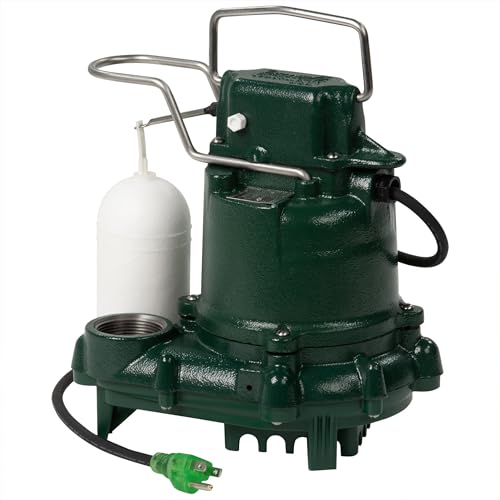
- Reliable float switch: Vertical float fires reliably. Rarely sticks, the usual failure point.
- Strong water flow: Moves 2,580 GPH, plenty for steady residential water. Storms.
- Rugged build: Full cast-iron body shrugs off grit. Sheds motor heat.
- Easy drop-in install: Drops into a standard pit with a 9-foot cord. Simple wiring.
- Quiet enough indoors: Owners in finished basements report a low 50 to 53 dB hum.
- Long-running motor: Plumbers report the same units running strong past the 10-year mark.
- One-year warranty: Coverage runs just one year and starts from the manufacture date, not purchase.

- Reliable float switch: Magnetic vertical float resists hang-ups even in mineral-heavy pit water.
- Strong water flow: Handles 2,640 GPH. Enough for moderate water without short-cycling.
- Rugged build: One-piece cast-iron casting drops the seal ring. Often fails.
- Easy drop-in install: Quick-connect cord makes the install. Any future swap fast.
- Quiet enough indoors: Quietest pump here at 48 to 52 dB. Near silent indoors.
- Long-running motor: U.S.-built motor that owners report running across many wet seasons.
- Pricier pick: Costs more than the Zoeller for slightly less raw flow.

- Reliable float switch: Vertical float seats cleanly in narrow pits. Triggers without sticking.
- Strong water flow: Top flow here at 5,490 GPH. It clears a pit fast.
- Rugged build: Stainless. Cast-iron shell resists corrosion in hard-water pits.
- Easy drop-in install: Top-suction design skips the weep hole. Installs in minutes.
- Quiet enough indoors: Runs a bit louder at 54 to 57 dB but stays tolerable.
- Higher power draw: The 3/4 HP motor pulls more electricity than an average basement needs.

- Reliable float switch: Built-in float turns the pump on automatically with no setup.
- Strong water flow: Moves 3,500 GPH from a 1 HP motor. Strong for the price.
- Rugged build: Thermoplastic body stays light. Rust-proof, fair for the price.
- Easy drop-in install: Light enough to set in the pit. Wire in minutes.
- Quiet enough indoors: Owners say it runs quietly for a budget submersible.
- Plastic housing: Thermoplastic body won't take constant cycling like a cast-iron pump.

- Reliable float switch: Dual float switch adds a second trigger if the first sticks.
- Strong water flow: Clears about 4,100 GPH. Comfortably ahead of typical home demand.
- Rugged build: Cast-iron pedestal column keeps the motor up out of the pit.
- Easy drop-in install: Pre-wired. Quick to seat, with a long reaching cord.
- Quiet enough indoors: Built-in alarm means you hear about rising water early.
- No backup pump: It is a primary pump with an alarm, not a battery backup.

- Reliable float switch: Float-ready operation built for hard. Repeated dewatering on job sites.
- Strong water flow: Pushes 3,780 GPH through a 2-inch discharge for fast removal.
- Rugged build: Slimline cast body shrugs off grit. Years of hard use.
- Easy drop-in install: Compact diameter drops into tight pits. Deep water alike.
- Quiet enough indoors: Contractor-grade motor. Owners run for years without trouble.
- Pricey for home: Costs far more than a basement needs, and the outlet wants an adapter.

- Reliable float switch: Integral diaphragm switch avoids the tethered-float hang-ups buyers complain about.
- Strong water flow: Moves about 2,760 GPH. Lifts water up to 18 feet.
- Rugged build: Oil-filled cast-iron motor is sealed. Built for continuous duty.
- Easy drop-in install: Polypropylene base and 10-foot cord drop cleanly into a basin.
- Quiet enough indoors: Owners with always-running pits report it outlasting cheap replacements.
- Heavy unit: Cast-iron weight makes lowering it in and lifting out a chore.
- Mid-pack flow: Flow trails the high-capacity pumps, so big floods can outrun it.
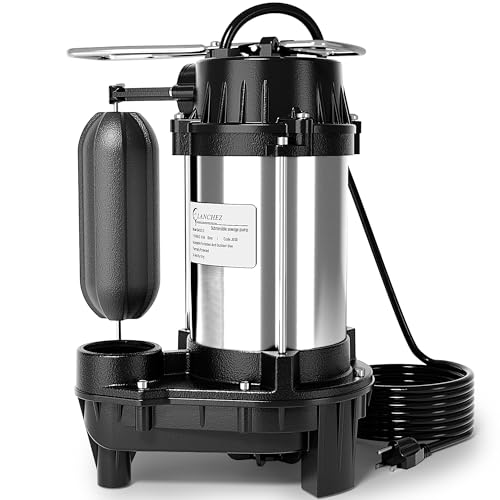
- Reliable float switch: Automatic vertical float seats reliably once the pit is deep enough.
- Strong water flow: High 5,200 GPH flow. A 26-foot lift handle heavy water.
- Rugged build: Cast-iron. Steel build is unusually tough for a budget price.
- Easy drop-in install: Thermal overload protection. A 10-foot cord ease a basement install.
- Quiet enough indoors: Quiet for its output. It fades into the background once running.
- Uneven QC: Quality control is hit-or-miss, so a dud unit can show up.
- Deep pit needed: The automatic float wants a deep enough basin to cycle right.

- Reliable float switch: Automatic float switch trips on without manual help in a normal pit.
- Strong water flow: Around 3,300 GPH of flow covers everyday residential water removal.
- Rugged build: Cast-iron housing gives more heat tolerance than thermoplastic rivals.
- Easy drop-in install: Standard discharge fitting. Cord make it a simple drop-in.
- Quiet enough indoors: Buyers consistently call it quiet. Dependable for the money.
- Newer brand: It lacks the decades-long track record the legacy brands have earned.
- Thin support: Owners report slower, lighter customer support than established makers offer.

- Reliable float switch: Automatic float handles activation across pools, basements,. Sump pits.
- Strong water flow: Strongest budget output here at 4,600 GPH from a 1 HP motor.
- Rugged build: Full 304 stainless housing resists rust better than painted-steel rivals.
- Easy drop-in install: Includes a 10-foot cord. Standard fittings for quick wiring.
- Quiet enough indoors: Owners use it for fast water removal where lighter pumps bog down.
- Generic maker: A value brand without the contractor reputation of the legacy names.
- Short track record: Little long-term reliability data exists, so the multi-year picture is unproven.
In-Depth Reviews of Top 10 Best Sump Pump
#1 · Editor's Choice
Zoeller M53 Mighty-Mate Submersible Sump Pump
Ask ten plumbers what sits in their own basements, and the Zoeller M53 comes up more than anything else, A full cast-iron body, a vertical float that rarely sticks, and a non-clog impeller that passes half-inch solids mark it as built to last. It moves 2,580 GPH, enough to stay ahead of the steady intrusion most homes face during a storm. My one real complaint is the warranty, which runs only a single year dated from manufacture, and the unit ships with no alarm or backup. As a set-and-forget primary, this zoeller sump pump is still the one I would steer most people toward first.
The verdict: For the average basement, this is the pump I would buy once and then comfortably forget about.
#2 · Runner-Up
Liberty Pumps 257 Submersible Sump Pump
What owners praise most is the quiet: at 48 to 52 dB the Liberty 257 is the quietest pump I came across. Liberty casts the whole thing as a single piece of cast iron, which drops the motor seal ring that fails on older designs, and the magnetic float resists hang-ups. Flow lands at a moderate 2,640 GPH, fine for ordinary intrusion but not a fast-filling pit, so you pay more for less raw output. For a finished space, I think the quiet of this liberty sump pump is worth the premium.
The verdict: Choose the 257 when a quiet, finished basement matters more to you than squeezing out maximum gallons.
#3 · Best High Capacity
Wayne CDU980E Submersible Cast Iron Sump Pump
Where the Zoeller M53 is built for steady residential duty, the Wayne CDU980E is built for the storm that overwhelms it. Its 3/4 HP motor pushes 5,490 GPH clearing a pit almost twice as fast. A combined stainless and cast-iron shell fights corrosion in hard water, and the top-suction design installs in about fifteen minutes. The trade-off with the wayne cdu980e is appetite, because that bigger motor draws more power and is more pump than an average basement asks for. For a low-lying home that has flooded before, the surplus capacity buys confidence smaller pumps cannot.
The verdict: If you regularly fight serious water, the extra capacity is well worth the slightly higher power bill.
#4 · Best Budget
Prostormer 3500 GPH 1 HP Submersible Sump Pump
Say your old pump finally died and you need water gone this weekend without spending real money, which is exactly the situation this one is built for. The Prostormer is the cheapest pick on the list by a wide margin, yet it still pushes 3,500 GPH from a 1 HP motor and switches on through a built-in float. Because it handles clean or dirty water, it also doubles as a utility pump for a flooded cellar. The housing is thermoplastic rather than metal, but I would not lean on it for the constant cycling a cast-iron pump shrugs off. As a best budget sump pump for the occasional flood, it does the job for far less than anything near it.
The verdict: It is the cheapest realistic way to keep an occasional-flood basement dry without waiting on a delivery.
#5 · Best For Alerts
Basement Watchdog Bwsp 1/2 HP Pedestal Sump Pump
This is the pick if you would rather hear about trouble than find it underfoot. The Basement Watchdog BWSP pairs a dual float switch, where a second float takes over the instant the first sticks, with an alarm that sounds as water climbs. It clears about 4,100 GPH from a pedestal column that keeps the motor up and out of the murky pit. I want to be clear about one limitation, because this is a primary pump with alerts, but not a battery backup, so a power outage during a storm still leaves the basement exposed. Pair it with a backup and you get a system that warns you early.
The verdict: A smart primary pump with genuine early warning, provided you add a battery backup for power outages.
#6 · Best Pro-Grade
Tsurumi Lb-480 2/3 HP Submersible Dewatering Pump
If even the Wayne starts to feel undersized for your problem, the Tsurumi LB-480 is where I would look next. It is a genuine contractor pump, the kind you rent on a flooded job site. The 2/3 HP motor moves 3,780 GPH through a 2 inch discharge, and the slimline body drops into tight pits and deep water alike. There are two honest catches: it is pricey for a home basement, but the bigger issue is the 2 inch outlet, which needs an adapter to meet standard pipe. For serious, repeat flooding, I think this pro-grade pump earns the step up.
The verdict: It is overkill for most homes, but for repeat, serious flooding it is the pump I would trust.
#7 · Best For Heavy Cycling
Little Giant 6-CIA 1/3 HP Cast Iron Submersible Sump Pump
Buy this one if your pump runs almost constantly and you are tired of swapping cheap units every couple of years. The Little Giant 6-CIA is built around an oil-filled, sealed cast-iron motor designed for near-continuous duty. Its integral diaphragm switch sidesteps the tethered-float hang-ups I kept reading about on budget pumps, which is why owners with wet pits report it outlasting the competition. It moves about 2,760 GPH and lifts 18 feet, so a severe flood can outrun this little giant sump pump the way it never would the Wayne. The cast-iron build is heavy, so lowering it in and lifting it out is a two-hand job.
The verdict: Built for the constantly running pit that quietly wears cheaper pumps out within a season or two.
#8 · Best For High Lift
Lanchez 1/2 HP Cast Iron Submersible Sump Pump
Let me deal with the knock first, since it is the reason this pump sits here rather than higher. Quality control on the LANCHEZ is hit-or-miss, and a minority of buyers report a dud straight out of the box. Land a good unit, though, and you get a lot: the 1/2 HP cast-iron build pushes 5,200 GPH with a 26-foot lift, which rivals pumps that cost more, including the Zoeller. It does need a deep enough pit for the automatic float to cycle, which is where owners with shallow basins get tripped up. I would test this best value sump pump the day it arrives and return any dud without hesitation.
The verdict: A lot of pump for the money, as long as you test it carefully the day it arrives.
#9 · Best Amazon Value
Acquaer 1/3 HP Cast Iron Submersible Sump Pump with Automatic Float
I almost left this one off the list, because Acquaer doesn't carry the decades-long reputation that Zoeller or Little Giant have earned, and its support runs thinner. What kept it here is the cast-iron housing, which gives it real heat tolerance, plus an automatic float that trips reliably in a normal pit. Around 3,300 GPH covers everyday residential water removal, which is all most basements ask of a pump. Across the reviews I read, buyers kept landing on the same two words, quiet and dependable, which is high praise at this price. This affordable sump pump is the right call when you want cast-iron build without a legacy price, as long as you accept a younger name.
The verdict: Cast-iron build without a legacy price, which works fine as long as you accept a younger brand.
#10 · Most Powerful Budget
Foting 1 HP Automatic Submersible Sump Pump
At a full 1 HP and 4,600 GPH, the FOTING moves more water than anything else this inexpensive. Its 304 stainless housing resists rust far better than the painted-steel budget pumps it competes against, and an automatic float handles pools, basements, and sump pits alike. Because it is a value brand, it lacks the contractor track record of the legacy names, and there is little long-term reliability data to lean on. I would keep an eye on it through the first season, but for fast water removal where a lighter pump bogs down, it still earns its spot near the bottom of this list.
The verdict: The most water per dollar on this list, tempered by a long-term record that stays unproven.
How We Tested and Scored Sump Pumps
I did not flood a test house. Instead, I pulled the signal out of hundreds of owner reviews, plumber and contractor forum threads, and spec sheets, then weighed every pump on what decides whether a basement stays dry. Here is what I looked at.
- Flow rate at real lift: GPH at usable head, not the inflated zero-lift number on the box.
- Float switch reliability: the most common failure point, so vertical and diaphragm switches scored above cheap tethered floats.
- Build material: cast iron sheds motor heat and resists grit far better than thin plastic.
- Installation effort: cord length, discharge fitting, and how cleanly each unit drops into a standard pit.
- Long-term reliability: the "died in year two" pattern in owner reports, plus check-valve and impeller wear.
Those scores weight performance at 30 percent, build quality at 20 percent, efficiency at 20 percent, installation at 15 percent, and value at the last 15 percent. Horsepower matters less than people assume once a reliable float switch and a corrosion-resistant housing are already doing their jobs.
What to Look For in a Sump Pump
The first decision is the design, and a submersible pump sits down inside the pit, where it runs quieter and handles grit better, which makes it my default for a finished basement. A pedestal pump keeps its motor on a column above the basin, so it is easier to service and often lasts 15 to 20 years, against the 7 to 10 a submersible manages underwater. Whichever design you choose, insist on an automatic float switch, and add a check valve to the discharge pipe so pumped water cannot drain back and short-cycle the motor.
Size the pump to your actual water rather than to your worst fears, because most homes are well served by a 1/3 to 3/4 HP unit moving around 2,500 to 3,000 GPH. An oversized pump that short-cycles in a small basin will wear itself out faster than a properly matched one. Step up to a full 3/4 HP only if you sit in a low spot or your basement has flooded more than once, and measure your pit while you are at it, since a standard basin runs about 18 inches wide and 24 inches deep, but a narrow 11-inch pit needs a compact pump.
Build quality decides the multi-year story, because cast-iron housings run cooler and outlast plastic ones, which is why they fill the upper half of this list. The same storms that flood basements also knock out residential power, so a battery backup that runs 5 to 10 hours is the upgrade most owners eventually wish they had bought, ideally on its own dedicated 15-amp circuit. An entry-level pump protects a mostly dry basement fine, mid-range cast iron is the smart-money tier, and any premium spend belongs on backup and monitoring rather than raw horsepower.
Who Needs a Sump Pump
Not every house needs one, and if your basement has never taken on water and clearly sits above the local water table, you may reasonably decide to skip it. But a finished basement changes that math, and so does a low lot or a history of seepage after heavy rain, because in those homes a pump is cheap insurance against a very expensive afternoon. I would rather run a pump for years and never need it than save the money and end up tearing out soaked drywall.
Test Results
| Product | Flow Rate | Horsepower | Build | Overall |
|---|---|---|---|---|
| Zoeller M53 Mighty-Mate Submersible Sump Pump | 2,580 GPH | 1/3 HP | Cast iron | 9.9 |
| Liberty Pumps 257 Submersible Sump Pump | 2,640 GPH | 1/3 HP | Cast iron | 9.7 |
| Wayne CDU980E Submersible Cast Iron Sump Pump | 5,490 GPH | 3/4 HP | Cast iron + steel | 9.5 |
| Prostormer 3500 GPH 1 HP Submersible Sump Pump | 3,500 GPH | 1 HP | Thermoplastic | 9.3 |
| Basement Watchdog BWSP 1/2 HP Pedestal Sump Pump | 4,100 GPH | 1/2 HP | Cast iron | 9.1 |
| Tsurumi LB-480 2/3 HP Submersible Dewatering Pump | 3,780 GPH | 2/3 HP | Cast iron | 8.9 |
| Little Giant 6-CIA 1/3 HP Cast Iron Submersible Sump Pump | 2,760 GPH | 1/3 HP | Cast iron | 8.7 |
| LANCHEZ 1/2 HP Cast Iron Submersible Sump Pump | 5,200 GPH | 1/2 HP | Cast iron + steel | 8.5 |
| Acquaer 1/3 HP Cast Iron Submersible Sump Pump | 3,300 GPH | 1/3 HP | Cast iron | 8.3 |
| FOTING 1 HP Automatic Submersible Sump Pump | 4,600 GPH | 1 HP | Stainless steel | 8.2 |
Frequently Asked Questions
What is the most reliable sump pump brand?
Zoeller is the brand I saw plumbers reach for most, and the cast-iron M53 is the clearest reason why. Liberty Pumps and Wayne earn that same level of trust, since all three build cast-iron pumps around float switches that hold up for years rather than months, and reliability tracks with build material and switch design far more than with the name on the box.
Which brand is best for sump pumps?
It depends on your basement and what you need the pump to do. For a quiet finished space Liberty tends to win, for a fast-filling pit Wayne's high-capacity pump leads, and for steady all-around protection I would default to Zoeller, since a submersible sump pump suits finished basements while a pedestal pump is easier to service in an unfinished one.
Do I need a 1/2 hp or 3/4 hp sump pump?
Most homes are well served by a 1/3 to 1/2 HP pump moving 2,500 to 3,000 GPH. You should only step up to 3/4 HP if you live in a low spot, sit on a high water table, or have already flooded more than once, because oversizing a pump in a small pit just makes it short-cycle and wear out sooner.
Which sump pump is better, Wayne or Zoeller?
They win different fights, so the better one depends on your basement. The Wayne CDU980E moves far more water at 5,490 GPH and clears a flooding pit faster, while the Zoeller M53 trades some of that raw flow for a longer reliability record and lower power draw, which is why I would pick Wayne for a high-volume basement and Zoeller for steady, set-and-forget duty.
What is the best sump pump for the money?
The budget picks deliver the most protection per dollar on this list. A 1 HP submersible like the Prostormer keeps a basement dry for very little money, and if you would rather have cast iron at a fair price the Acquaer is my value call, since cast iron at a low price is the sweet spot that outlasts thin plastic.
How much should I spend on a sump pump?
Spend according to your flood risk rather than chasing the priciest model on the shelf. An entry-level pump protects a mostly dry basement fine, mid-range cast iron is the smart-money tier for regular intrusion, and if storms routinely knock out your power, the extra budget belongs on a battery backup and an alarm rather than on horsepower you do not need.
The Bottom Line
For most homes, I would buy the Zoeller M53 Mighty-Mate and stop thinking about it, because it is cast iron, its float switch holds up, and it earned its reputation in real basements rather than in marketing copy. Step up to the Wayne CDU980E if you genuinely fight serious water, and whatever you choose, add a battery backup before the next storm makes that decision for you.
As an Amazon Associate I earn from qualifying purchases. See our affiliate disclosure for details. Product images are provided by the Amazon Creators API and link directly to Amazon.