10 Best Air Compressor of 2026, Tested Head-to-Head
Out in the yard or back in the garage, the right air compressor is the difference between a project that flows and one that stalls while you wait for the tank to catch up. After reading through hundreds of owner reviews, contractor forum threads, and every recent shop test I could find, the DeWalt DWFP55126 6-gallon pancake is the one I would hand most people first. It runs the tools a homeowner actually owns without drama.
This list is not ten versions of the same machine. It runs from a 1-gallon unit quiet enough to use near a sleeping house up to a 60-gallon two-stage built for continuous spray work, with cordless and finish-trim options in between. I scored each on air delivery, build, noise, and how it fits a real garage. Practically speaking, most people need far less compressor than the spec sheets push them toward.
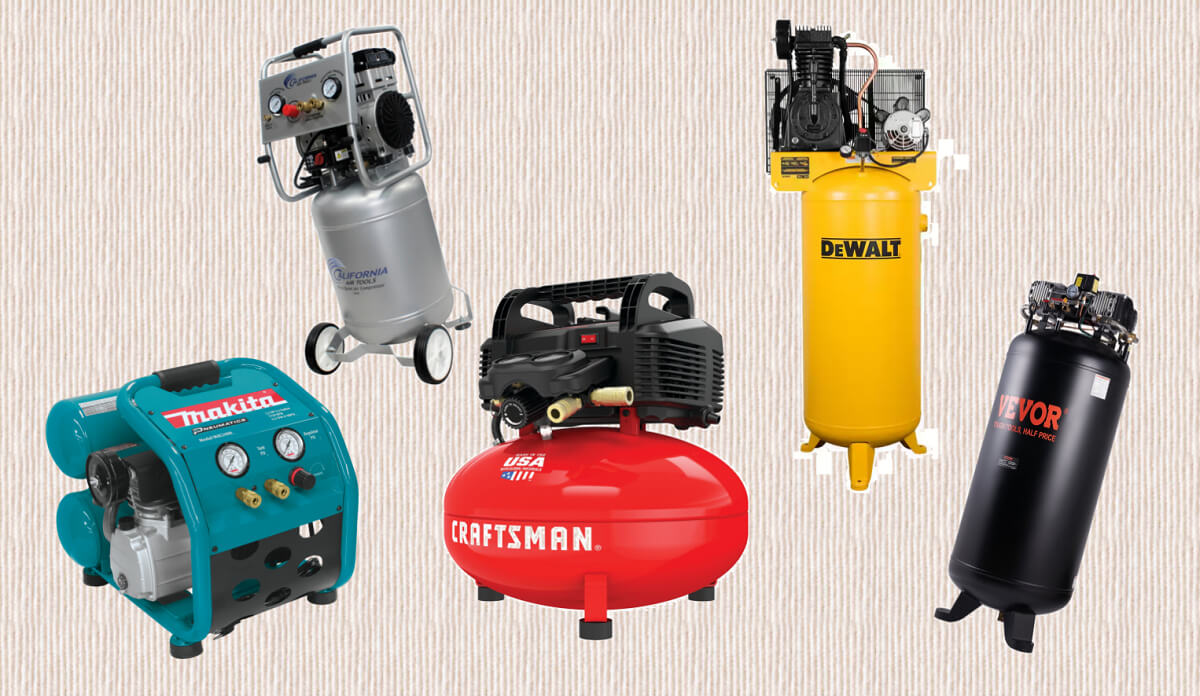

- Strong air delivery: Recovers fast for a pancake, keeping a brad nailer fed during steady trim runs.
- Tough lasting build: Roll-cage frame and a high-efficiency motor owners report starting fine in cold garages.
- Low-maintenance pump: Oil-free design means no oil changes, just the occasional tank drain after use.
- Holds steady pressure: 165 PSI tank gives enough reserve to drive a few fasteners between cycles.
- Powers real air tools: Two universal couplers let two people run finish nailers off one tank.
- Quieter than most: At 75.5 dBA it will not rattle the whole house like older pancake units.
- Drain valve: The bottom drain valve sits awkwardly low, so emptying the tank means crouching every time.

- Strong air delivery: Pushes 1.2 CFM, more air than most one-gallon rivals manage at this size.
- Tough lasting build: Dual-piston pump is rated for thousands of hours before it needs real attention.
- Low-maintenance pump: Oil-free design skips oil changes entirely, which suits occasional weekend users well.
- Holds steady pressure: 120 PSI tank holds enough for trim nailing and topping off tires.
- Powers real air tools: Handles brad and finish nailers without straining on light indoor jobs.
- Quieter than most: At 56 dBA you can run it near a sleeping house without complaints.
- Air output: The one-gallon tank empties fast, so air-hungry tools will outrun it quickly.

- Strong air delivery: 4.2 CFM keeps framing and finish nailers fed without constant waiting on the tank.
- Tough lasting build: Cast-iron Big Bore pump is the reason owners keep these running for years.
- Low-maintenance pump: Oil-lubricated pump runs cooler, though it does ask for occasional oil checks.
- Holds steady pressure: Twin-stack 4.2-gallon tank and 130 PSI give solid reserve for back-to-back work.
- Powers real air tools: Comfortable driving framing nailers all day, where lighter pancakes start to lag.
- Weight: At 77 pounds it is a two-hand lift, not a grab-and-go pancake.

- Strong air delivery: 2.6 CFM recovery matches pricier pancakes, fine for nailing and tire work.
- Tough lasting build: Light 29-pound body with a high-efficiency motor owners say starts in the cold.
- Low-maintenance pump: Oil-free pump needs no upkeep beyond draining the tank after a session.
- Holds steady pressure: 150 PSI tank stores a useful reserve for a budget pancake unit.
- Powers real air tools: Two ports let a pair of finish nailers share the tank on small crews.
- Noise: At 78.5 dBA it is loud enough that ear protection is genuinely worth it.

- Strong air delivery: 15.4 CFM at 90 PSI feeds HVLP spray guns and sanders continuously without sagging.
- Tough lasting build: Two-stage cast-iron pump and a 60-gallon tank built for decades of shop use.
- Low-maintenance pump: Splash-lubricated pump is simple to service with periodic oil and filter checks.
- Holds steady pressure: 175 PSI reserve and a 100% duty cycle mean it never needs a break.
- Powers real air tools: Runs continuous-duty tools like media blasters that smaller tanks simply cannot.
- Install: Needs a dedicated 230V circuit and freight delivery, so it is not a casual buy.

- Strong air delivery: 1.6 CFM is enough to keep a trim nailer moving on a no-power jobsite.
- Tough lasting build: Brushless motor and oil-free pump survive the knocks of being carried everywhere.
- Low-maintenance pump: Oil-free design means nothing to top off between jobs, just charge and go.
- Holds steady pressure: 125 PSI and a 2-gallon tank cover a surprising number of fasteners per charge.
- Battery cost: You pay separately for the 36V battery and charger if new to the platform.
- Run time: Heavy continuous nailing drains a pack faster than a corded unit ever would.
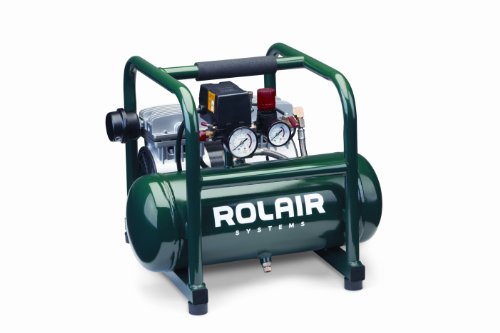
- Strong air delivery: 2.35 CFM is strong for a one-gallon unit, beating most compact rivals on output.
- Tough lasting build: Steel roll-cage and a pro-grade pump explain why finish carpenters trust it.
- Low-maintenance pump: Oil-free pump skips maintenance while still running quietly all day long.
- Holds steady pressure: 125 PSI tank keeps a finish nailer fed on trim and molding work.
- Tank size: One gallon means it cycles often under anything heavier than finish work.
- Heft: At 39 pounds it is dense for its size, surprising people who expect featherweight.
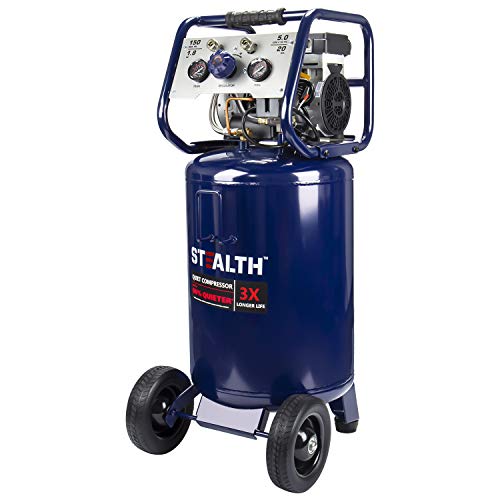
- Strong air delivery: 4 CFM handles impact wrenches and ratchets for intermittent garage jobs.
- Tough lasting build: 20-gallon steel tank on casters built to live in one corner of the shop.
- Low-maintenance pump: Oil-free pump means no oil changes, unusual for a tank this size.
- Holds steady pressure: 150 PSI reserve lets the motor rest between bursts of tool use.
- Recovery: Four CFM lags under continuous impact use, so plan for pauses on big jobs.
- Casters: The small casters fight cracks and thresholds, so rolling across a rough floor sticks.
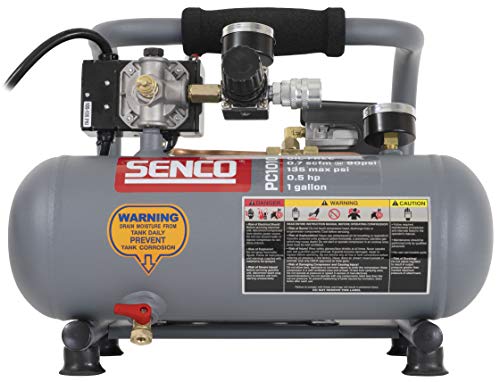
- Strong air delivery: 0.7 CFM is modest, but plenty for brad nailers and airbrush work.
- Tough lasting build: At 20 pounds it is light enough to carry up a ladder one-handed.
- Low-maintenance pump: Oil-free pump asks for nothing beyond an occasional tank drain.
- Holds steady pressure: 120 PSI tank recovers fast enough for steady finish-nailing indoors.
- Powers real air tools: Ideal for trim, hobby, and airbrush jobs where a big tank is overkill.
- Air ceiling: 0.7 CFM rules out impact wrenches, sanders, or anything thirsty for air.
- Bare tank: No hose or fittings are included, so budget for those before the first job.
- Cycles often: The tiny tank refills frequently, which you hear during longer airbrush sessions.
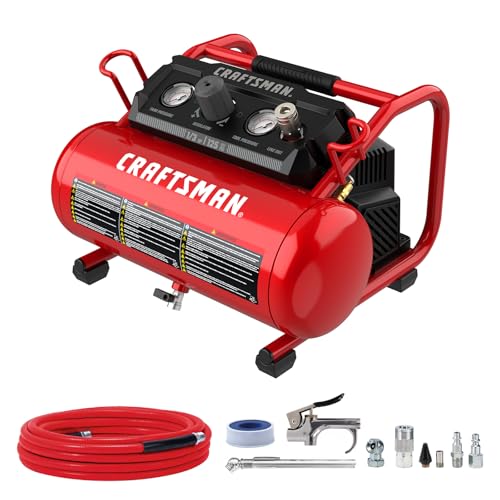
- Strong air delivery: Enough recovery for tire topping and light nailing around the house.
- Tough lasting build: Light, oil-free, and bundled with a kit so first-timers can start same day.
- Low-maintenance pump: Oil-free pump keeps upkeep to draining the small tank after use.
- Holds steady pressure: 125 PSI max gives a beginner enough reserve for inflation and small jobs.
- Light duty: Built for inflation and small fasteners, not for running shop tools for long.
- Plastic feel: The shroud and fittings feel budget, which matches what it is meant for.
Other Models Worth Considering

- Light pancake body, easy to grab and carry
- Oil-free pump needs only a tank drain
- Louder than the DeWalt, so wear ear protection
- Single regulator limits running two tools at once

- Big 20-gallon reserve handles impact tools well
- A lot of tank for a vertical footprint
- Filled tank is awkward to roll on rough floors
- Loud enough to want hearing protection

- 3.35 CFM is generous for spraying and nailing
- Oil-free pump skips maintenance entirely
- Brand service and parts thinner than name tools
- Higher-pitched motor noise tires you out

- Cordless battery works roadside with no outlet
- Dual-cylinder pump tops truck tires quickly
- Inflation only, cannot run nailers or sanders
- Heavy inflation work drains the pack fast
In-Depth Reviews of Top 10 Best Air Compressor
#1 · Editor's Choice
DeWalt DWFP55126 6-Gallon Pancake Air Compressor
Judge a pancake compressor by whether it disappears into the work, and this DeWalt mostly does. Owners across hundreds of reviews keep coming back to the same point: at 2.6 CFM and 30 pounds, it starts in a cold garage and feeds a brad nailer without theatrics. The honest limitation is air ceiling. Ask it to run an impact wrench for more than a few seconds and the 6-gallon tank empties, because a pancake is built for fasteners and inflation, not continuous tools. The Bostitch costs less and nearly matches it, but the DeWalt's two-port setup and quieter 75.5 dBA motor earn the top spot.
The verdict: The pancake most homeowners should buy first, with the honest caveat that it is for fasteners, not air-hungry tools.
#2 · Runner-Up
California Air Tools 1P1060S 1-Gallon Ultra-Quiet Air Compressor
If noise is the thing keeping you from buying, this is the one I would point you to. At 56 dBA the California Air Tools 1P1060S runs closer to conversation than to a shop, and reviewers consistently mention using it indoors without earplugs. It pushes 1.2 CFM, a touch more than most one-gallon units. The trade is obvious: a single gallon empties quickly, so this is a finish-and-inflation machine, not a tool for sanders. For trim work in a finished basement or a shared building, the quiet matters more than raw output.
The verdict: The pick when quiet wins, ideal for finish work in shared spaces.
#3 · Pro Workhorse
Makita MAC2400 Big Bore 2.5 HP Air Compressor
Most portable units tap out the moment you hand them a framing nailer. The Makita MAC2400 does not. Its cast-iron Big Bore pump moves 4.2 CFM and the twin-stack tank keeps up with back-to-back nailing that leaves pancakes gasping. Owners who run these for years credit the lower-RPM motor. The catch is the 77-pound weight; this is a set-it-down unit, not the grab-and-go pancake the DeWalt is. It also wants the occasional oil check, the price of an oil-lubricated pump.
The verdict: The portable that actually keeps a framing nailer fed, if you can live with the weight.
#4 · Best Value
Bostitch BTFP02012 6-Gallon Pancake Air Compressor
Buy this if you want most of what the DeWalt offers for less money. The Bostitch BTFP02012 hits the same 2.6 CFM and carries two ports, so a small crew can share the tank on a trim job. The 29-pound body is genuinely easy to move. Where it slips is noise: at 78.5 dBA it is loud enough that I would keep ear protection nearby for any long session. For a homeowner buying their first compressor for nailing and tires, it is the value sweet spot here.
The verdict: Nearly the DeWalt for less, and the strongest value here for a first compressor.
#5 · Premium Pick
Quincy Qt-54 60-Gallon Two-Stage Air Compressor
If you spray paint, run a media blaster, or keep an impact gun working for minutes at a stretch, the Quincy QT-54 is the real answer. The two-stage cast-iron pump moves 15.4 CFM at 90 PSI with a 100% duty cycle, which is shop-grade territory the portables here cannot touch. Painters treat it as a buy-once tool. It is not casual: you need a 230V circuit and freight delivery, and the frame is staying put. If that is overkill, the Stealth covers lighter shop duty.
The verdict: A buy-once shop machine for spraying and continuous tools, if your wiring can feed it.
#6 · Best Cordless
Metabo HPT EC36DAQ4 MultiVolt 36V Cordless 2-Gallon Air Compressor
This is the one for the jobsite with no outlet in sight. The Metabo HPT EC36DAQ4 runs entirely off a 36V battery, and 1.6 CFM is enough to keep a trim nailer moving through a surprising count of fasteners per charge. The freedom is the whole point. Two honest caveats: if you are new to the platform you are buying the battery and charger on top, and heavy continuous nailing drains a pack faster than any corded unit. For punch-list work and remodels, the cord you are not tripping over wins.
The verdict: The cordless freedom is worth it for remodel and punch-list work away from outlets.
#7 · Quietest Compact
Rolair JC10 1-Gallon Ultra-Quiet Hot Dog Air Compressor
You notice the heft before the quiet. The Rolair JC10 is dense for a one-gallon unit at 39 pounds, and that steel roll-cage is why finish carpenters keep buying them. It runs at 60 dBA, near the California Air Tools for calm, while pushing a stronger 2.35 CFM. The small tank cycles often under anything past finish work, which you will hear. But for trim, molding, and a long day of brad nailing, it is a quiet, tough little workhorse that earns its keep.
The verdict: A quiet, overbuilt one-gallon unit finish carpenters trust on long trim days.
#8 · Best 20-Gallon
Stealth SAQ-12018 20-Gallon Ultra-Quiet Air Compressor
It splits the difference between a pancake and a real shop compressor. The Stealth SAQ-12018 gives you a 20-gallon tank at 68 dBA, quiet enough that owners run it without the usual shop earmuffs. Four CFM covers intermittent impact and ratchet work in a home garage. Push it into continuous use, though, and recovery lags, so plan for pauses on bigger jobs. The casters also fight thresholds. If the Quincy is more machine than your circuit can feed, this is the sensible step down.
The verdict: The right middle ground when a pancake is too small and the Quincy is too much.
#9 · Best for Airbrush
Senco PC1010 1-Gallon Finish & Trim Air Compressor
I almost left this off for being too small, and that would have been a mistake for the right buyer. The Senco PC1010 moves just 0.7 CFM, but at 20 pounds it goes up a ladder one-handed and barely registers in a finished room. For brad nailers, trim, and airbrush work, that is the whole job. Reviewers who do detail and hobby work love it; the people who returned it tried to run sanders. No hose or fittings come in the box, so budget for those. Right tool, narrow lane.
The verdict: A narrow but excellent choice for airbrush, hobby, and trim work; skip it for shop tools.
#10 · Best Starter Kit
Craftsman 2-Gallon Portable Air Compressor
This is the starter kit, plain and simple. The Craftsman air compressor is a 2-gallon, oil-free unit bundled with a hose and accessories so a first-timer can inflate tires and drive small fasteners the same afternoon. At 125 PSI max it has enough for around-the-house jobs. It is light duty by design, so do not expect it to feed shop tools, and the fittings feel budget. For someone who just wants air in the garage without studying spec sheets, it works.
The verdict: The no-homework starter for inflation and light jobs, not a tool for the long haul.
How We Tested and Scored Air Compressors
I built this list the way I research anything for the garage: read the patterns, not the marketing. That meant hundreds of verified owner reviews sorted by most recent, contractor and woodworking forum threads, and the recent hands-on shop tests, then matching what people report against the published specs.
What I weighed on every unit:
- Air delivery: CFM at 90 PSI and how fast the tank recovers under a real tool, not the headline horsepower.
- Build and pump: oil-free versus oil-lubricated, tank material, and the owner-reported reliability that shows up after a year.
- Noise and livability: measured dBA, because an electric unit you run near a sleeping house is a different animal than a shop machine.
- Portability and footprint: weight, wheels, and whether it fits a corner of a one-car garage.
- Value and fit: whether the machine matches the jobs most buyers actually have.
Scoring weights: Air delivery 30%, Build and durability 25%, Noise and livability 20%, Portability and footprint 15%, Value and owner-reported reliability 10%.
What to Look For in an Air Compressor
The number that matters most is CFM at 90 PSI, matched to your thirstiest tool. A brad or finish nailer sips air, so a small air compressor in the 1- to 2-gallon range is plenty. An impact wrench, orbital sander, or spray gun drinks it, which is why those jobs push you toward a 20-gallon unit or a two-stage shop machine. Buy for your hungriest tool, then add a little headroom; do not buy a 60-gallon tank to fill bicycle tires.
Tank size is reserve, not power. A bigger gallon rating just means longer runs between cycles. Pump type is the durability question: oil-free units are maintenance-light and fine for occasional electric use, while oil-lubricated cast-iron pumps run cooler and last longer under daily load. Noise is the most underrated spec. A quiet 56 to 70 dBA unit changes whether you can work early without waking the house, and it is the first thing apartment-garage and basement users should check.
Three buckets cover almost everyone. Entry-level pancake and 2-gallon units handle inflation, trim, and tire work; store labels like Husky and Harbor Freight live here. Mid-range twin-stack and 20-gallon machines are the daily-DIY sweet spot. Premium two-stage units only make sense if you spray or sandblast. Match the bucket to the work and you will not overspend.
Who Needs an Air Compressor?
If you only inflate tires and the odd air mattress, I would skip this list entirely. A small 12V inflator like the ETENWOLF does that from your trunk. These compressors earn their space once you start driving fasteners. For a homeowner hanging trim or doing light repairs, a pancake or 2-gallon unit is plenty.
Step up only when your tools get thirsty. I tell friends to pick the one tool they most want to run. A finish nailer points at the pancakes. An impact wrench points at the 20-gallon Stealth. A spray gun points at the two-stage Quincy. Buy for that tool and skip the spec-sheet noise.
Test Results
| Product | Air @90 PSI | Noise | Tank | Overall |
|---|---|---|---|---|
| DeWalt DWFP55126 6-Gallon Pancake Air Compressor | 2.6 CFM | 75.5 dBA | 6 gal | 9.9 |
| California Air Tools 1P1060S 1-Gallon Ultra-Quiet Air Compressor | 1.2 CFM | 56 dBA | 1 gal | 9.8 |
| Makita MAC2400 Big Bore 2.5 HP Air Compressor | 4.2 CFM | 79 dBA | 4.2 gal | 9.6 |
| Bostitch BTFP02012 6-Gallon Pancake Air Compressor | 2.6 CFM | 78.5 dBA | 6 gal | 9.4 |
| Quincy QT-54 5 HP 60-Gallon Two-Stage Air Compressor | 15.4 CFM | — | 60 gal | 9.2 |
| Metabo HPT EC36DAQ4 MultiVolt 36V Cordless Air Compressor | 1.6 CFM | — | 2 gal | 9.0 |
| Rolair JC10 1-Gallon Ultra-Quiet Hot Dog Air Compressor | 2.35 CFM | 60 dBA | 1 gal | 8.8 |
| Stealth SAQ-12018 20-Gallon Ultra-Quiet Air Compressor | 4 CFM | 68 dBA | 20 gal | 8.6 |
| Senco PC1010 1-Gallon Finish & Trim Air Compressor | 0.7 CFM | 73 dBA | 1 gal | 8.4 |
| Craftsman 2-Gallon Portable Air Compressor | — | — | 2 gal | 8.2 |
Frequently Asked Questions
What is the most reliable type of air compressor?
The most reliable type is an oil-lubricated cast-iron pump, like the Makita or Quincy use. They run cooler and last longer under heavy daily load. For occasional electric use, oil-free pumps are nearly as durable and need almost no upkeep, which is why most pancake units use them.
What is the best air compressor for a home garage?
It depends on your tools. For nailing, inflation, and the odd repair, a 6-gallon pancake like the DeWalt covers a home garage easily. If you run impact wrenches or sanders, step up to a 20-gallon unit like the Stealth so the motor is not cycling constantly.
What is a good size air compressor for home use?
For most homeowners a 6-gallon pancake is the right size; it stores enough air for nailing and tire work without taking over the floor. Move up to 20 gallons only if you regularly run air-hungry tools like impact wrenches, ratchets, or an orbital sander.
What is the best air compressor for the money?
The Bostitch and DeWalt pancakes give you the most useful air per dollar for typical home jobs. They run the tools people actually own, stay light enough to move, and skip the maintenance of oil-lubricated pumps. Spend more only if your tools demand more CFM.
How much should I spend on an air compressor?
Think in tiers rather than a single number. An entry-level pancake or 2-gallon kit handles inflation and trim. A mid-range twin-stack or 20-gallon unit suits daily DIY and light mechanic work. A premium two-stage only earns its keep if you spray, sandblast, or run continuous-duty tools.
What features matter most in an air compressor?
CFM at 90 PSI matched to your thirstiest tool matters most, since that decides whether the compressor can actually keep up. After that, weigh tank size for run time, oil-free versus oil-lubricated for upkeep, and noise level if you work near living space or early in the morning.
The Bottom Line
For most people the honest answer is the DeWalt DWFP55126: it runs the tools a homeowner owns, stays easy to move, and asks for almost nothing in upkeep. If you spray or run continuous-duty tools, the Quincy QT-54 is the buy-once shop machine, and if noise rules your space, the California Air Tools 1P1060S is the one you can run without waking the house. Match the machine to the work, not the spec sheet, and any pick here will serve you for years.
As an Amazon Associate I earn from qualifying purchases. See our affiliate disclosure for details. Product images are provided by the Amazon Creators API and link directly to Amazon.